Design and engineering of a Welding Positioner and multi-degree-of-freedom table
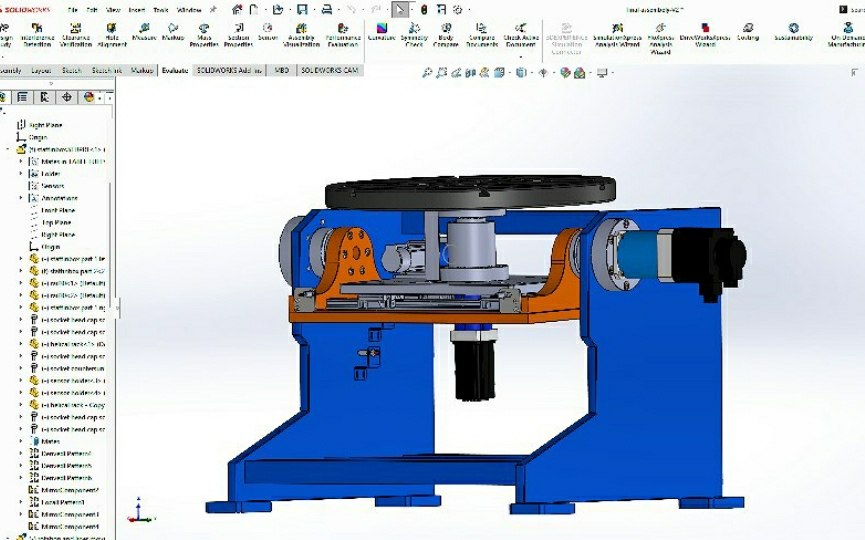
This project involves the design and engineering of a Welding Positioner and a multi-degree-of-freedom table with the aim of increasing the accuracy, speed and quality of welding processes. In this design, the rotation and positioning mechanisms of the workpiece have been developed in such a way that the operator can adjust the workpiece at different angles with minimal manual movement. The selection of the power transmission mechanism, the design of a high-strength structure, the placement of the drive system and the examination of the assembly and maintenance capabilities have been the most important parts of this project. The result of this design is an engineered and manufacturable equipment that can significantly increase the productivity of production lines and the accuracy of welding operations.
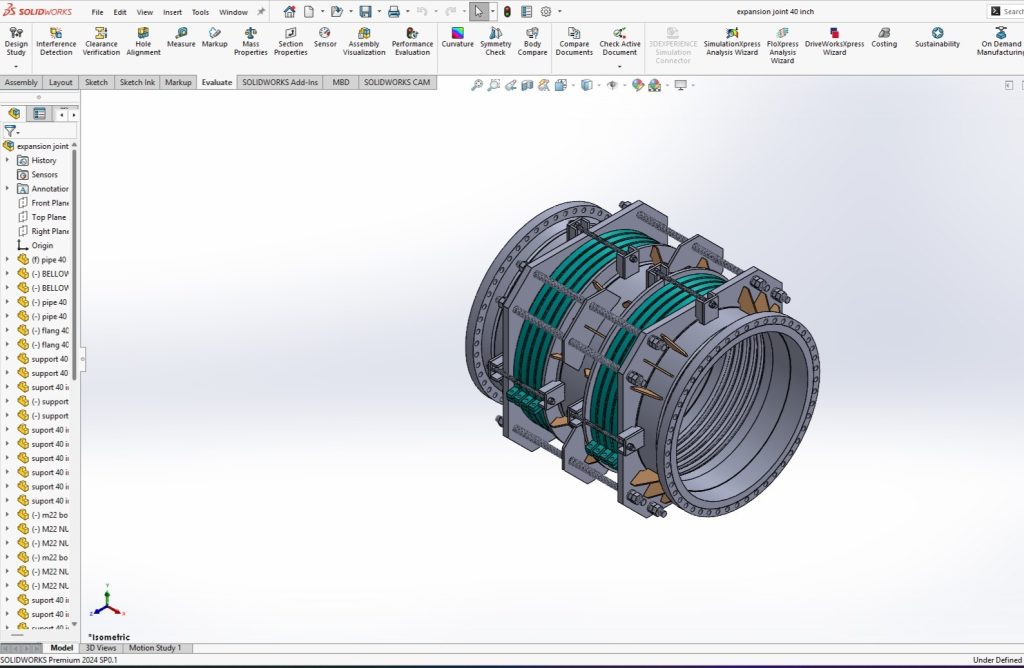
Expansion Joint Design for Gas Transmission Lines
In the Expansion Joint design project for gas transmission lines, the main focus has been on developing a reliable solution to increase the safety and stability of the transmission network. This equipment has been designed in such a way that it can absorb changes caused by thermal expansion and contraction, vibrations and mechanical displacements of the pipeline without creating destructive stresses. In this project, in addition to the detailed modeling of the assembly in the SolidWorks environment, structural details including metal jumpers, flanges, braces and the movement limiting system have been designed taking into account the functional requirements and manufacturability. The result of this process is an engineered product with high reliability that plays an effective role in increasing the life of the equipment, reducing maintenance costs and maintaining the stability of gas transmission lines.
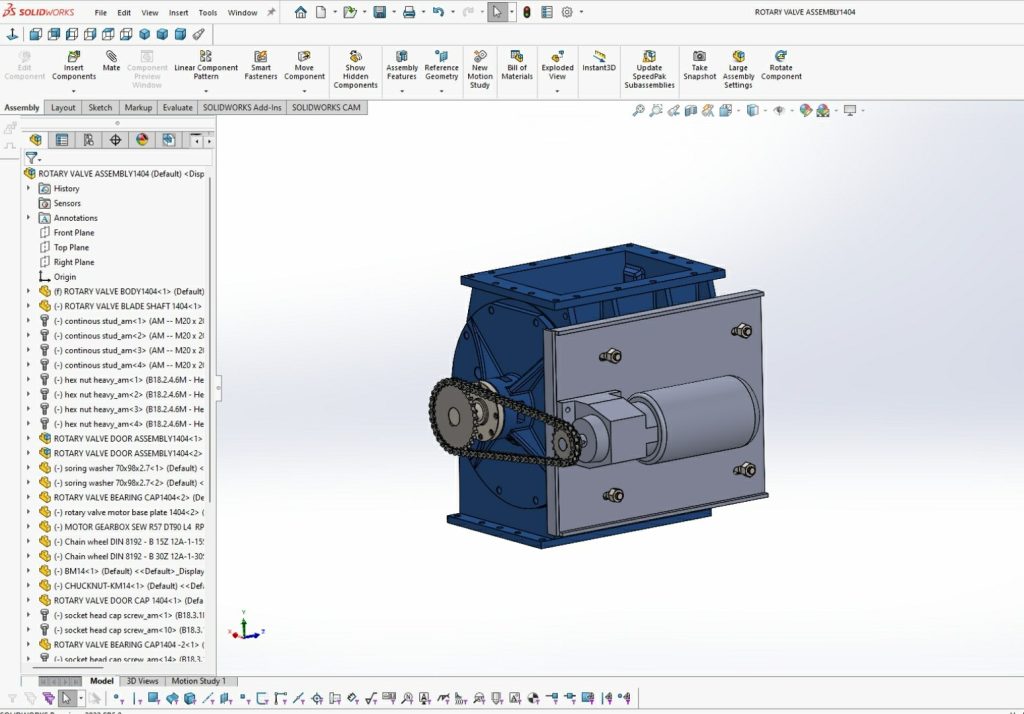
Rotary valve design
In this project, the Rotary Valve design was carried out with the aim of achieving uniform material transfer, effective sealing and stable performance under continuous operating conditions. In the engineering process, the body and rotor geometry, power transmission system, bearing placement, drive mechanism and sealing components were designed in such a way that, while reducing leakage and pressure drop, the durability of the equipment in industrial environments is increased. All parts were modeled and assembled in 3D and their manufacturability, assembly and serviceability were evaluated before production. The result of this project is to provide an engineered and reliable design that can be used in powder and granular material transfer systems with high efficiency and minimal need for repairs.
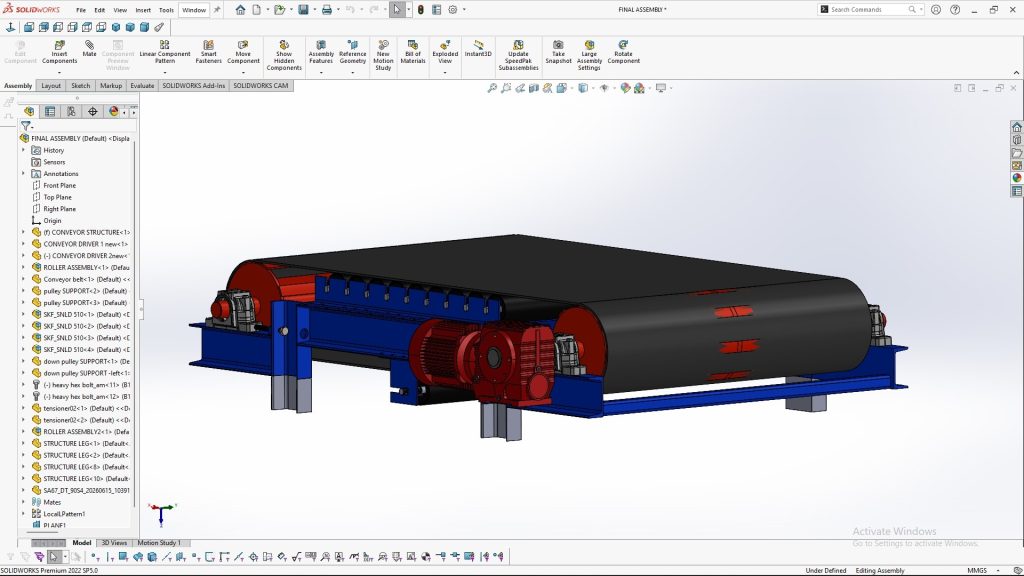
Conveyor belt design and types of conveyors
The design of conveyor belts and conveyor systems is not limited to the selection of a belt and chassis; it also requires a detailed understanding of the material transfer process, working conditions and operating requirements. In this project, the conveyor assembly is designed with an approach to increasing efficiency, reducing depreciation and ease of maintenance. All components, including the chassis, rollers, driving and moving drums, belt tensioning system, power transmission unit and auxiliary equipment, are modeled in 3D and integrated with each other to have stable performance in continuous working conditions. This design aims to reduce maintenance costs, increase the useful life of the equipment and provide a manufacturable solution for the mining, steel, cement and other material transfer lines industries.
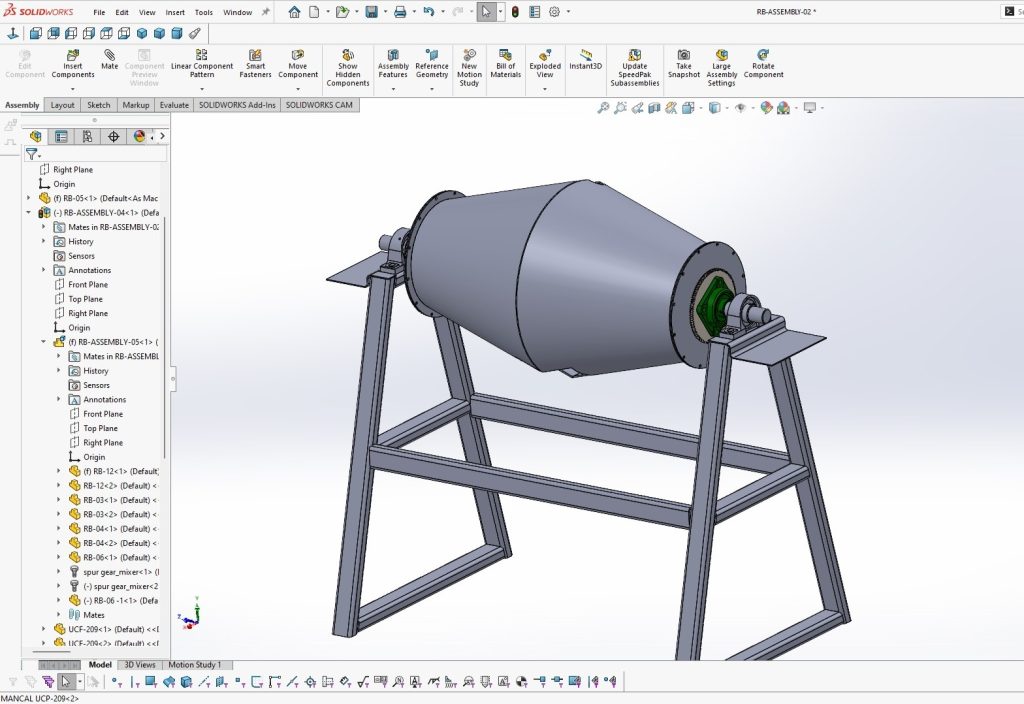
Rebone mixer design and industrial mixers
The design of Rebone Mixer and other industrial mixers goes beyond the construction of a rotating tank and requires a detailed understanding of the behavior of materials and the mixing process. In this project, the design is done with the aim of achieving the maximum uniformity of the composition, reducing the mixing time and increasing the efficiency of the process. The geometry of the tank, the arrangement of the ribbon blades, the power transmission system, the shaft, the bearings and the supporting structure are engineered in such a way that, while creating an effective material flow, the creation of dead zones and the accumulation of materials are prevented. The result of this design is a reliable and manufacturable equipment that can guarantee stable performance, optimal energy consumption and high mixing quality in the food, chemical, pharmaceutical, mining and material production industries.
Plastic injection mold design for lever valve cartridge shell
This project involves the design and 3D modeling of a plastic injection mold for a lever valve cartridge shell in SolidWorks software. During the design process, all mold components, including plates, guideway system, ejector mechanism, and standard parts, are precisely designed and assembled in accordance with engineering principles and manufacturability.
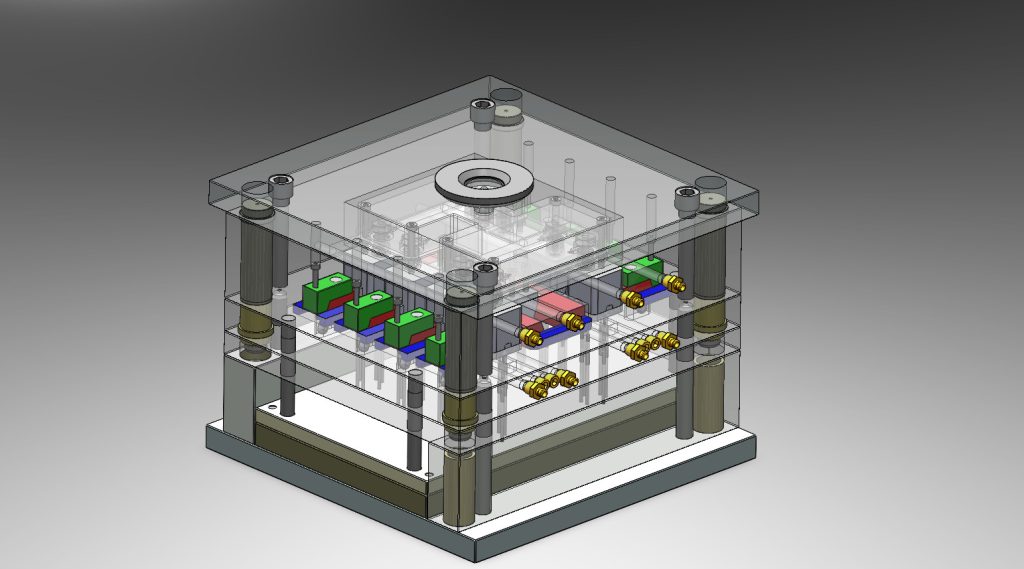
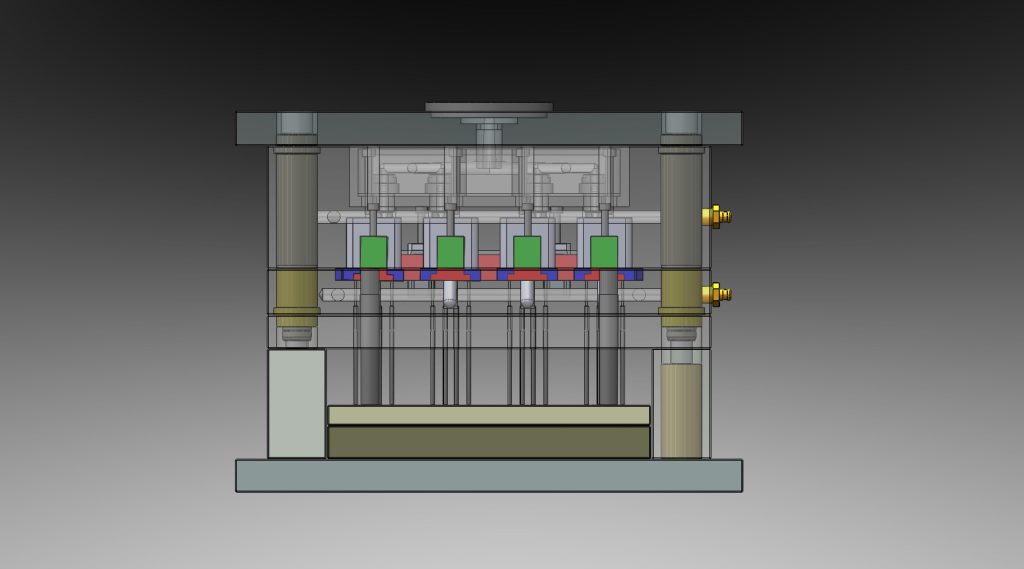
The goal of this project was to achieve a mold with stable performance, high quality of the manufactured part, and increased productivity in the production process. In designing this mold, factors such as ease of assembly and maintenance, reduced production cycle time, strength of parts, and the possibility of mass production were considered.
Design of four-point bending machine
This project involves the 3D design of a Four-Point Bending Fixture in SolidWorks. In this design, all mechanical components including jaws, loading rollers, support base, joints, and assembly assembly are modeled with the aim of achieving high accuracy, adequate rigidity, and ease of fabrication and assembly.
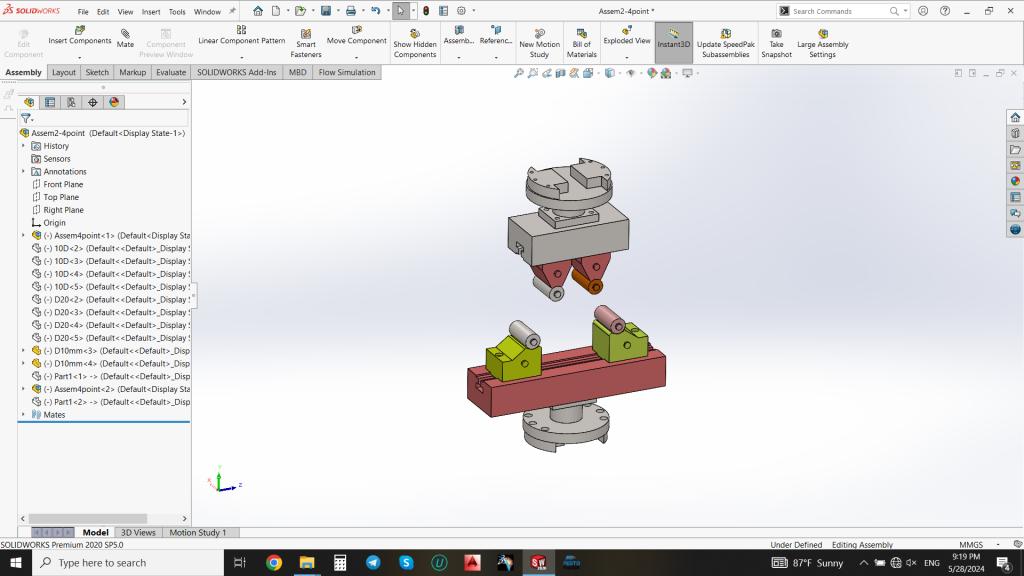
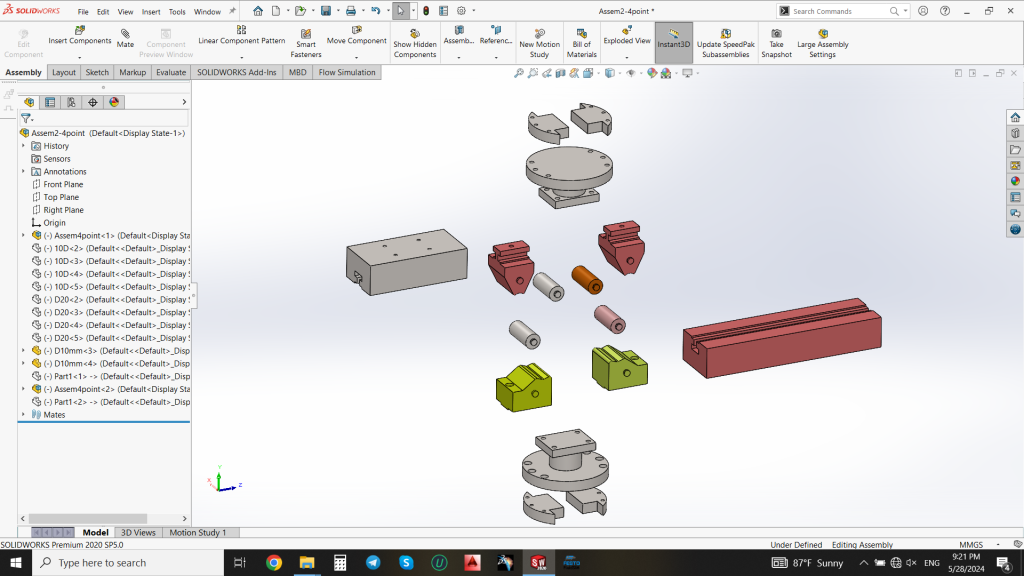
The four-point bending machine is used to evaluate the mechanical behavior and strength of parts and materials under uniform loading. In the design of this set, factors such as uniform force distribution, ability to adjust the location of supports, reduction of measurement errors, and compatibility with universal testing machines have been considered to provide accurate and reliable performance in mechanical tests.
Industrial water purification device design
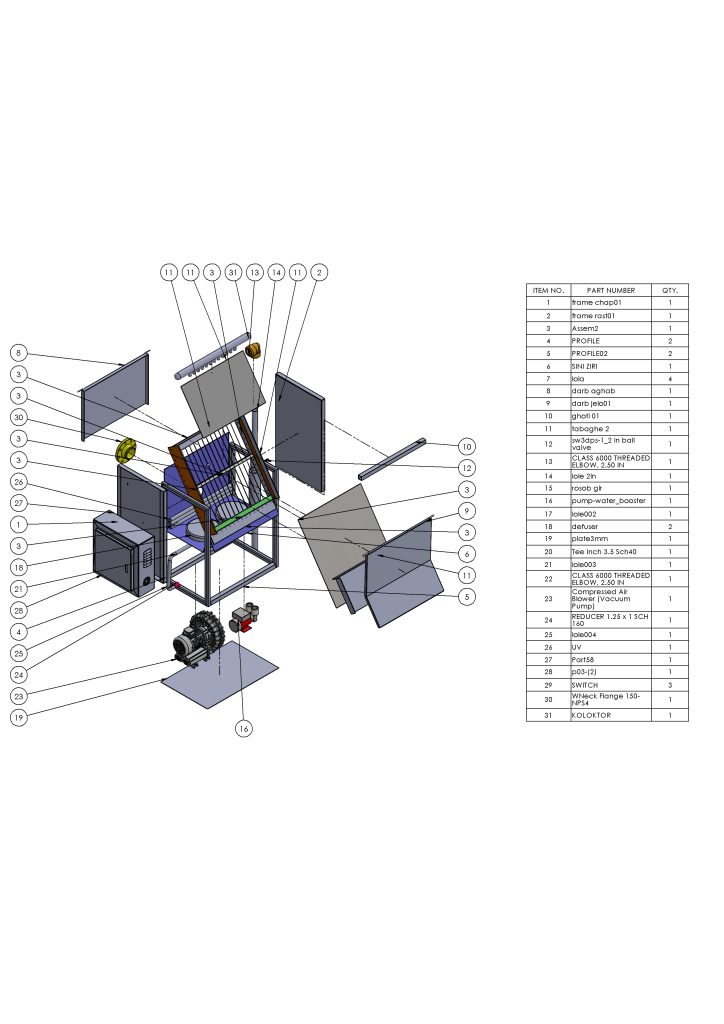
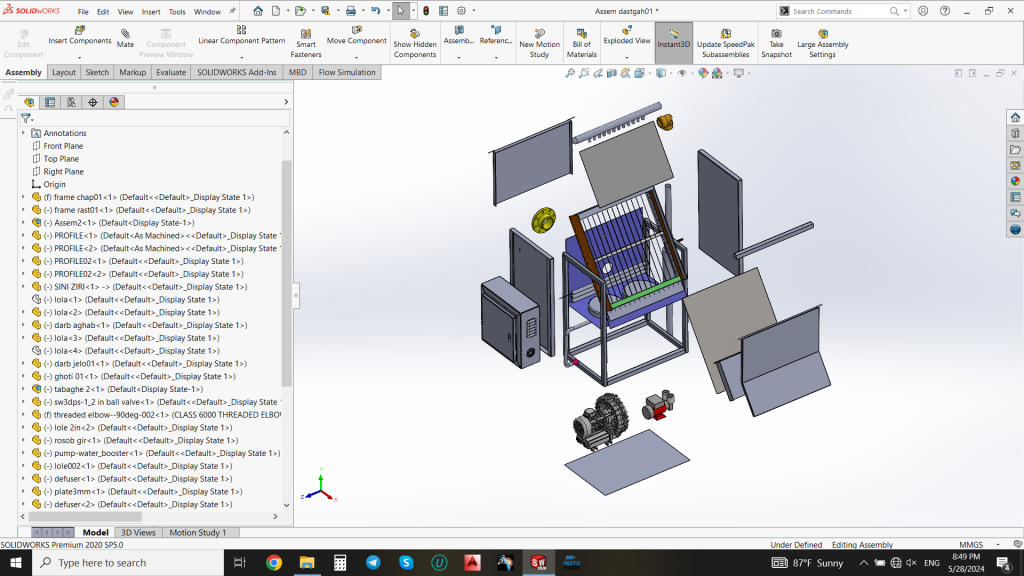
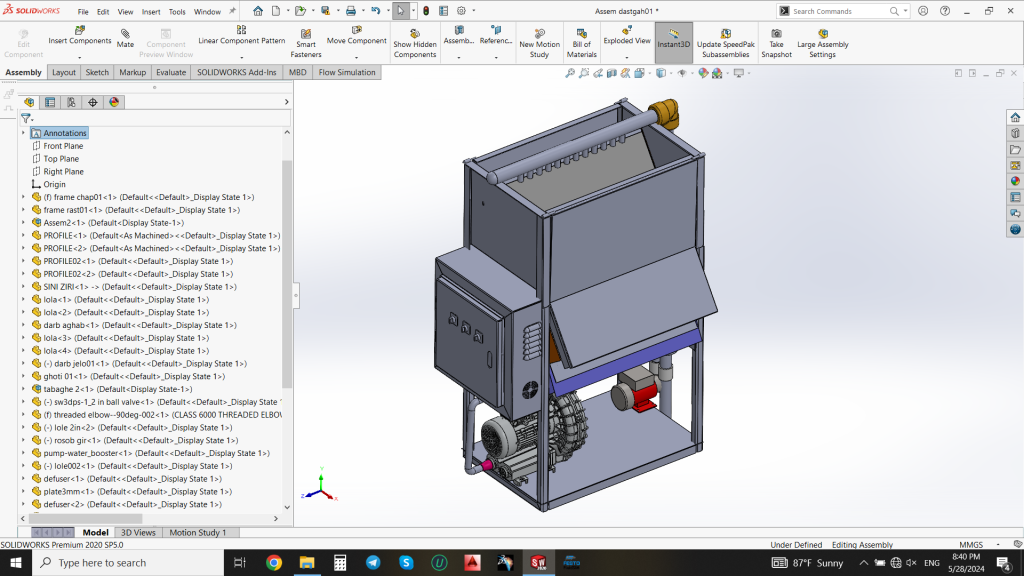
This project was developed with the aim of designing a compact, practical and manufacturable industrial water treatment device. In the design process, the equipment layout was done in such a way that, while making optimal use of the available space, access to the main components for service and maintenance was easily possible. All parts and assemblies were modeled and assembled in 3D so that their performance and coordination could be fully examined before construction. In this design, in addition to the chassis strength and precise placement of the equipment, special attention was paid to details such as the appropriate piping route, installation of electrical equipment, reduction of vibrations and ease of assembly. The output of this project is an engineering and executable model that can be used as the basis for manufacturing the device and reducing production time and costs.
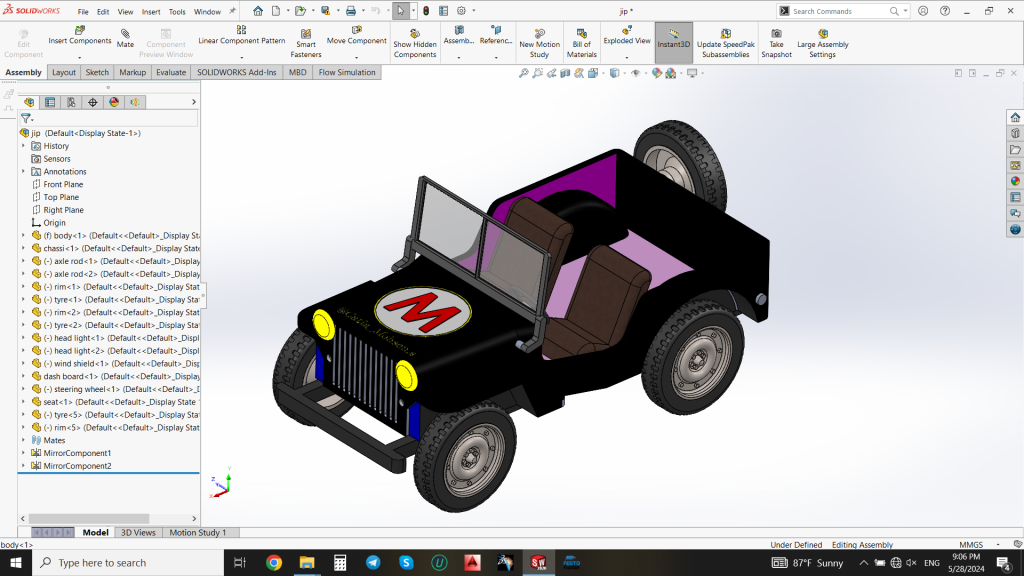
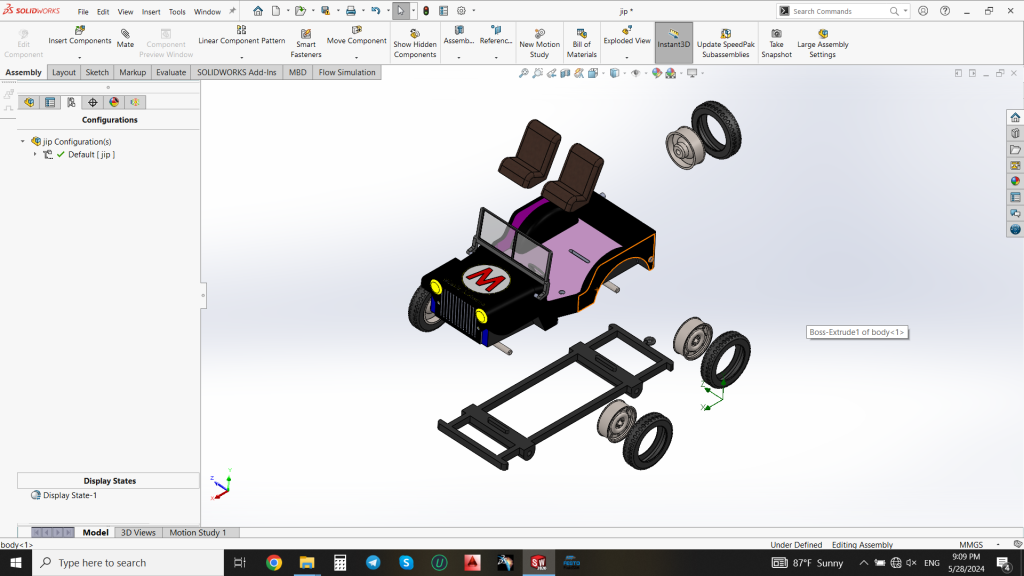
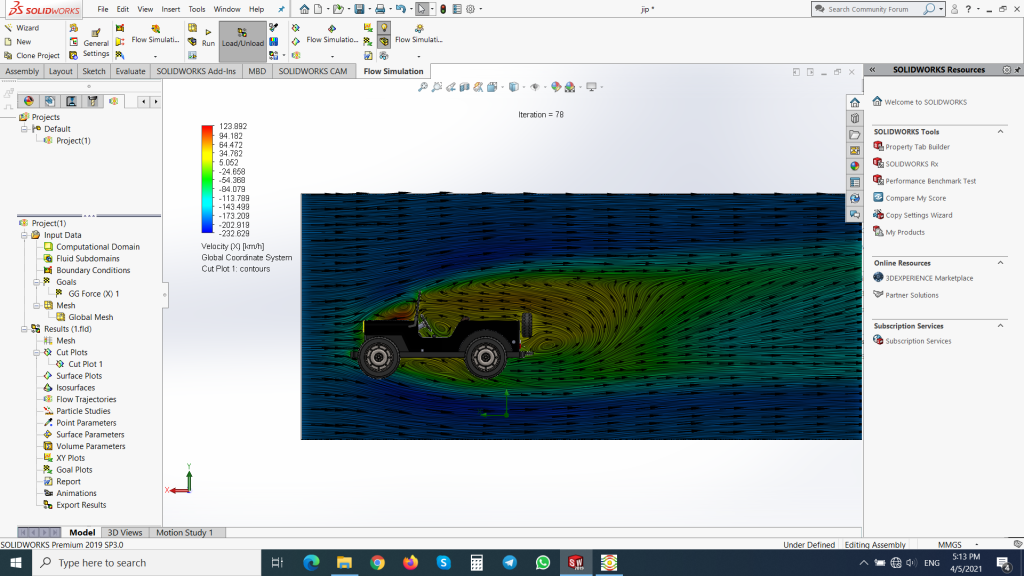
Jeep vehicle design and analysis
This project involves the 3D design of a Four-Point Bending Fixture in SolidWorks. In this design, all mechanical components including jaws, loading rollers, support base, joints, and assembly assembly are modeled with the aim of achieving high accuracy, adequate rigidity, and ease of fabrication and assembly.